Building a brand identity within a search-everywhere or multichannel marketing strategy involves creating a consistent presence across the platforms and websites potential users are most likely to use. This broader digital footprint not only strengthens brand recognition but can also support SEO by reinforcing topical relevance and entity associations across the web. To be effective, the messaging and positioning across these platforms should remain consistent. At the center of that identity is the about page on the website itself.
Voicing for about us content should be what is offered to the visitor, not a dry history centered on the brand.
About Online Brand Identity
The about page is often overlooked because it is usually not the page visitors use to make a purchase decision. In many cases, the content placed on the page is little more than an expanded mission statement. Traditionally, mission statements were created for business documents and investors, while smaller self-funded websites may rely on a short statement that functions more like an elevator pitch for introductions and networking. Outside of YMYL (Your Money or Your Life) topics, where trust and credibility signals carry greater weight, about pages are often relatively low-traffic sections on many retail and informational websites.
Online, however, the about page serves a much larger role: It helps define the scope of the website, the topics it intends to cover, and the site's overall semantic vertical. This information helps search engines and AI systems interpret how the website should be categorized and understood. Content that falls too far outside the topical authority may struggle to maintain visibility in search engines.
Reputation Management
Because search systems attempt to satisfy user intent, the about page often becomes the central location for information about a website or business. This makes it an important part of online reputation management, as the information a site provides about itself can influence how both users and search systems evaluate credibility, identity, and topical authority. This content influences the narrative an AI constructs about the brand.

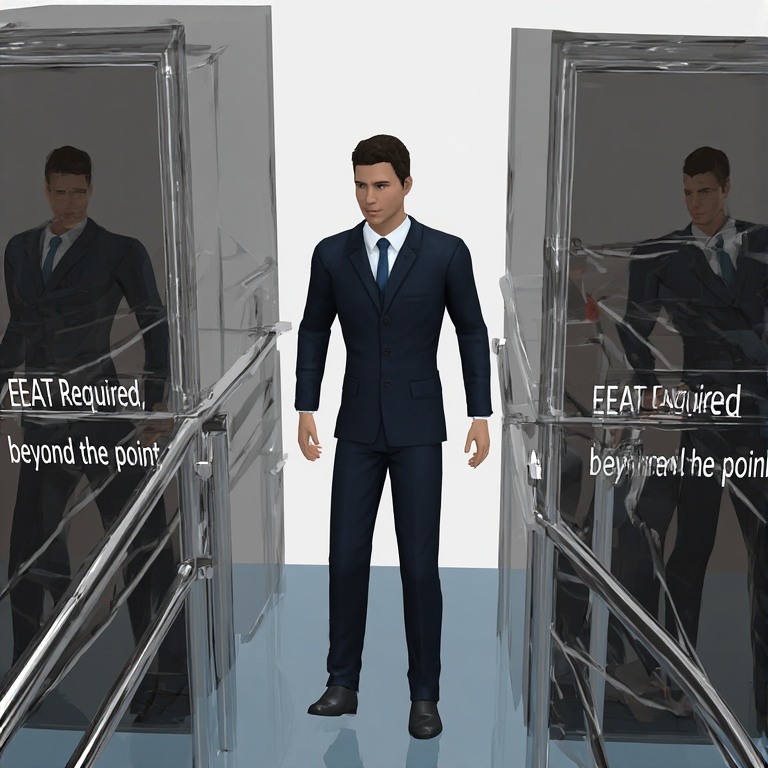
EEAT Content
Expanding on visitor intent around the "About Us" page, the content should help establish the experience, expertise, authority, and trustworthiness of the website or business. The page should satisfy users who want to better understand who is behind the site and why the information or services offered can be trusted. Signals such as professional credentials, company history, industry recognition, or even links to organizations like the Better Business Bureau (BBB) can help reinforce credibility in ways that may not be as relevant on other pages.
The "About Us" page is not simply another section of a website for EEAT purposes. It exists because users actively look for it when evaluating the credibility of a business or publisher. Search engines and AI systems also commonly use about pages as supporting signals when evaluating the legitimacy and topical focus of a website. Information found on the about page may also appear in AI-generated answers when users ask questions about the website or brand.
It should also be noted
Both the publisher (the website or business) and the author (the individual person) can develop topical authority. Websites with multiple authors may create dedicated profile pages that help establish the background, expertise, and identity of each contributor. However, privacy concerns, limited publicly available information, and identity resolution challenges can make it more difficult for search systems to confidently associate content with a unique individual author. Lesser-known authors are also less likely to receive knowledge panels or broader entity recognition within search systems, although author profile pages and structured data can still help reinforce identity and topical associations.
Topical Scope and Authority
A website whose about page identifies the business as a fast food restaurant may still publish health-related information about ingredient quality while remaining within its topical scope and authority. However, extensive content about farming practices could fall outside the primary focus of a website structured around fast food services. In contrast, a website centered around farming that also operates a restaurant serving food produced on its own farm maintains a much stronger semantic relationship between those topics.
The about page content, its structured data, and the overall site architecture work together to help classify the website's primary areas of expertise. This classification can influence how search engines and AI systems interpret the relevance of other pages across the site. In many ways, the about page acts as a connective layer between the site's identity, topical focus, and content structure.
About Us Page Updates
About pages are often treated as evergreen content that rarely needs updating. In practice, however, the page should evolve alongside the business, especially as the site's expertise, services, or topical focus expands over time.
Consider the progression of Amazon. The company originally focused on online book sales before expanding into DVDs, consumer electronics, cloud computing, and broader ecommerce services. As the business evolved, the about page and supporting site content also needed to reflect those expanding areas of expertise and market focus. The broader takeaway is that the about page should accurately represent the scope and authority needed to support the visibility of the site's content.
It should also be noted for Niche Verticals
Content on smaller websites is often better served by focusing on a narrower topical niche rather than attempting to cover a broad vertical too early. The site's content, structure, and about page should consistently support that specialized focus. Expanding into a broader vertical generally requires significantly more supporting content, authority signals, and topical depth in order to maintain relevance and visibility across a wider range of subjects.
The Website Schema and the About Page
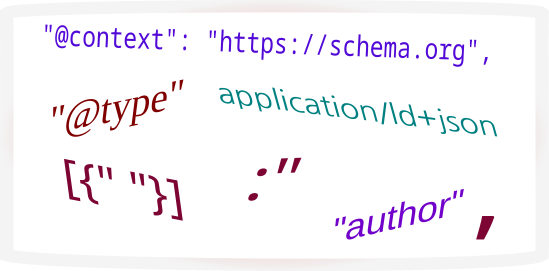
Structured data is not a replacement for on-page content. Its purpose is to help reduce ambiguity in human language and clarify relationships that may not be immediately obvious from the page structure alone. The visible content on the page should support and validate the information defined in the schema markup. For this reason, schema is not generally considered a direct ranking factor; however, by making content easier for machines to interpret, it can still influence visibility within search engines and AI systems.
The ["@type": "AboutPage"] schema may also influence how search engines and AI systems interpret the purpose and topical focus of a website. In some cases, the description associated with the about page may be quoted directly within search features or AI-generated summaries, making it an important signal for communicating the site's identity and topical breadth.
The ["@type": "Organization"] schema can also be replaced with more specific entity types depending on the business. For example, a restaurant may use ["@type": "Restaurant"], while a farm business could use ["@type": "LocalBusiness"] along with a ["sameAs":"https://en.wikipedia.org/wiki/Farm"] reference or another authoritative source that more accurately identifies the business entity. The description property within these schema types can still provide contextual information; however, the description associated with the ["@type": "AboutPage"] schema is often more directly quoted or referenced within search and AI-generated responses.
It should also be noted
When a Google My Business profile is created, the description used within the profile is often prioritized over the about page schema for local search results.
Beyond the About Us Page
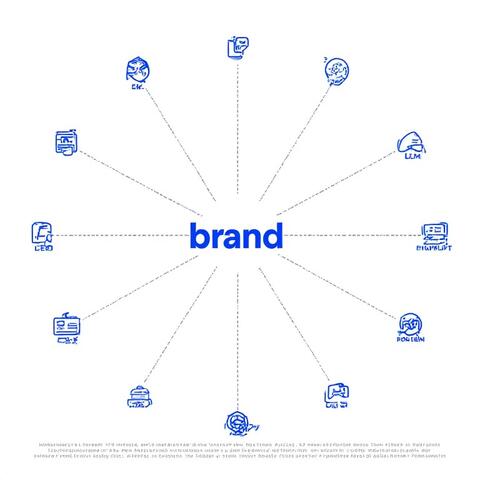
While the about page plays a central role in defining brand identity, the broader structure of the website also contributes to how search engines, AI systems, and users interpret the site's purpose. Internal linking, site categories, pillar pages, navigation structure, and external references all help reinforce the site's topical authority and communicate what the brand is about. These supporting signals may not carry the same centralized influence as the about page itself, but they should remain consistent and avoid conflicting with the site's primary identity.
Visual imagery beyond the logo should also align with the primary purpose and positioning of the website. Images used across social platforms, business listings, and other external profiles should reinforce a consistent brand identity. Likewise, the websites and entities linked to and from the site can help shape how search systems interpret the site's topical relationships and broader semantic associations.
It should also be noted
The about page can help reduce ambiguity around business or brand names by clearly stating what the business does and, in some cases, what it is not associated with. This additional context can help both users and search systems better distinguish the brand from similarly named entities or unrelated topics. However, the effectiveness of this approach depends in part on how well AI and search systems interpret contextual and negative associations, as not all systems process negation or contrastive context with the same level of accuracy.

Contact Information for This Page
Created:
by Wayne Smith – Raising the Standards
Wayne Smith is the founder of Solution Smith, with over 20 years of experience in SEO, and online marketing.
Contact Solution Smith for SEO and technical consulting related to online and webmaster services.